AI-Driven Tangible Chinese Idiom Learning System for USR Practice (AI成語方塊)
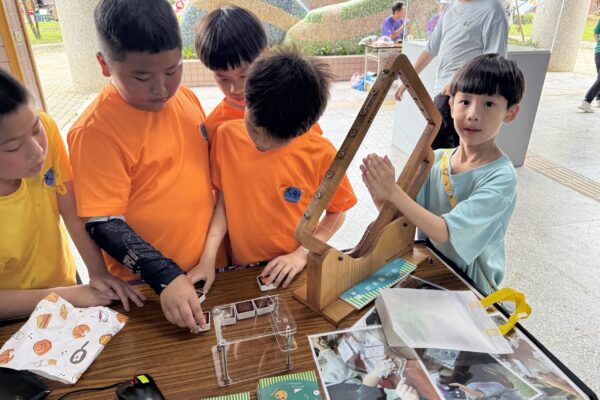
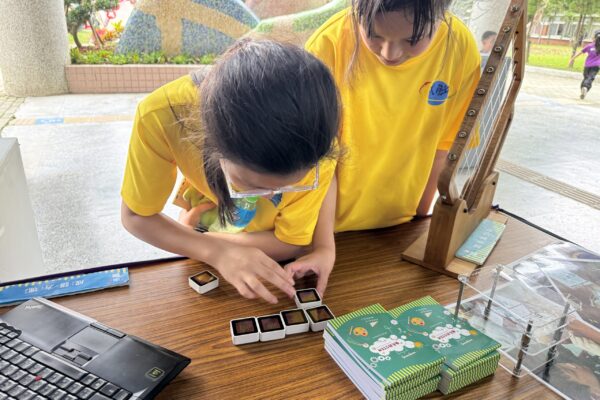
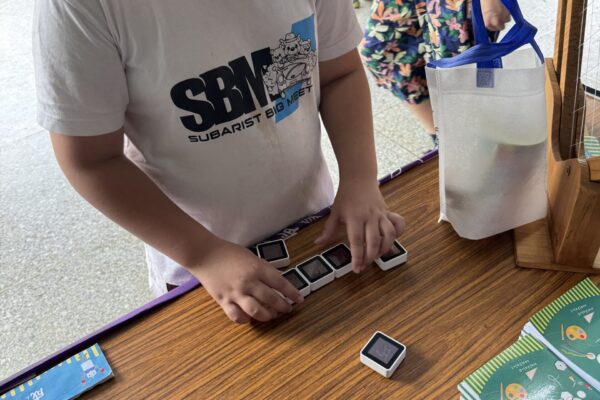
Chinese idioms are the linguistic essence of Chinese culture, composed of four characters that carry rich historical and cultural meanings. In Taiwan’s elementary education, idioms are a key part of the language curriculum; however, students often struggle to understand and use them correctly due to rote memorization methods. To address this challenge, we developed an AI-Driven Tangible Chinese Idiom Learning System based on the Sifteo Cube, a tangible user interface (TUI) initially created by the MIT Media Lab. The system adopts a game-based learning (GBL) approach to increase engagement and provide an intuitive hands-on experience. In each activity, students select four out of six cubes to form a correct idiom, while two AI-generated distractor characters increase the challenge and interactivity. For example, consider the Chinese idiom “拋磚引玉”, six Chinese characters are displayed individually on the screens of six Sifteo Cubes. In this case, the AI generates a six-character set “拋磚引玉蝶頭” by adding two distractor characters, “蝶” (butterfly) and “頭” (head). The correct idiom combination is “拋磚引玉,” as illustrated in Fig. 1(left), while Fig. 1(right) shows the complete six-character challenge displayed on the cubes. The core of this research is how to solve the problem of automating and intelligently setting idiom questions and ensure that each word in the six blocks of each question is reasonable, a distractor, and appropriate to each other.
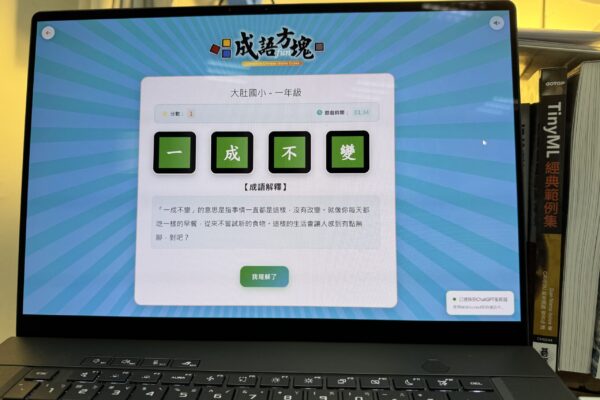
The system integrates large language models (LLMs) and AI algorithms to automate question generation. From an initial corpus of 1,400 idioms, the AI dynamically produces over 20,000 idiom-based questions tailored to different grade levels. It ensures that the distractor characters are semantically related yet misleading, maintaining educational appropriateness. An additional algorithm verifies correct idiom assembly and provides real-time AI-generated explanations to reinforce learning. Furthermore, to determine whether the idioms are correctly assembled horizontally or vertically, we developed an algorithm for verifying the correct assembly of idiom cubes to manage the challenging and distracting AI-generated questions. When a question is answered correctly, the system’s AI automatically generates an explanation of the idiom’s meaning, ensuring that the explanations remain understandable for elementary school students throughout the learning process. Each correct answer earns points, which can then be compared among students from different classes, schools, or regions. This tangible, game-based idiom learning approach effectively enhances learning motivation.
This study was implemented in four rural elementary schools in Taiwan’s Hsinchu and Miaoli regions, where limited resources and declining student numbers have affected academic motivation. Supported by National Tsing Hua University’s USR initiative, this project combined AI technology and tangible learning to enhance students’ engagement and motivation while bridging the digital learning gap between urban and rural schools. Moreover, this research aligns with UNESCO’s recent initiatives promoting the integration of AI in education. To evaluate user acceptance of this new educational technology, the Technology Acceptance Model (TAM) was applied, examining four key dimensions: Perceived Usefulness (PU), Perceived Ease of Use (PEOU), Attitude Toward Use (ATU), and Behavioral Intention to Use (BI). Results from experimental data and student feedback showed that integrating the AI-Driven Tangible Chinese Idiom Learning System into classroom practice significantly improved idiom learning performance. Students perceived the system as applicable, enhancing learning efficiency and comprehension through AI-generated questions and real-time feedback. They also found it easy to use, emphasizing the intuitive and hands-on interaction of the Sifteo Cubes that required no technical expertise. In terms of ATU, students expressed intense enjoyment of the game-based learning approach, many using it daily for its fun and educational value. The findings suggest that this learning mechanism can help bridge the technological acceptance gap between urban and rural schools. By integrating the rich academic resources of University Social Responsibility (USR) initiatives, the project aims to enhance students’ interest in idiom learning, lower the barriers to adopting new technologies, and promote more equitable access to innovative learning experiences across different educational contexts. These efforts align with the United Nations Sustainable Development Goals (SDGs), particularly in promoting quality education, sustainable cities and communities, and partnerships for sustainable development.
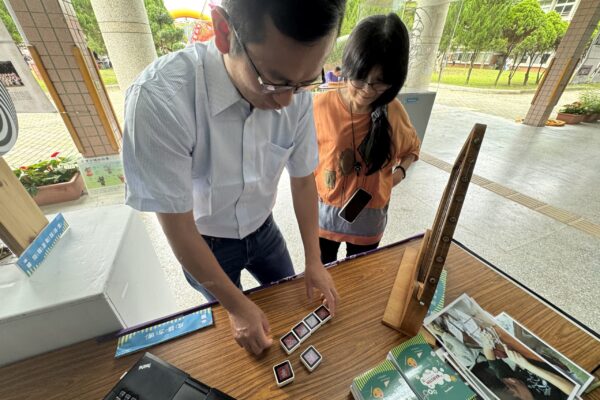
In the future, we aim to further expand the AI-Driven Tangible Chinese Idiom Learning System to more schools, fostering inclusive and innovative learning opportunities for all. During the implementation of the USR initiative, many rural teachers and parents expressed strong appreciation for the system. They found it both entertaining and educational, as it enabled learners to acquire idiom-related knowledge through play. Some even suggested extending the system’s application to community colleges, where it could serve as a cognitive training tool to help prevent age-related memory decline, thereby enhancing elderly well-being and promoting the concept of lifelong learning.
Keywords: AI, Tangible, Large Language Models, Idiom, University Social Responsibility, Education, Learning, Technology Acceptance Model
大肚國小實地操作與實驗: